AI in Education
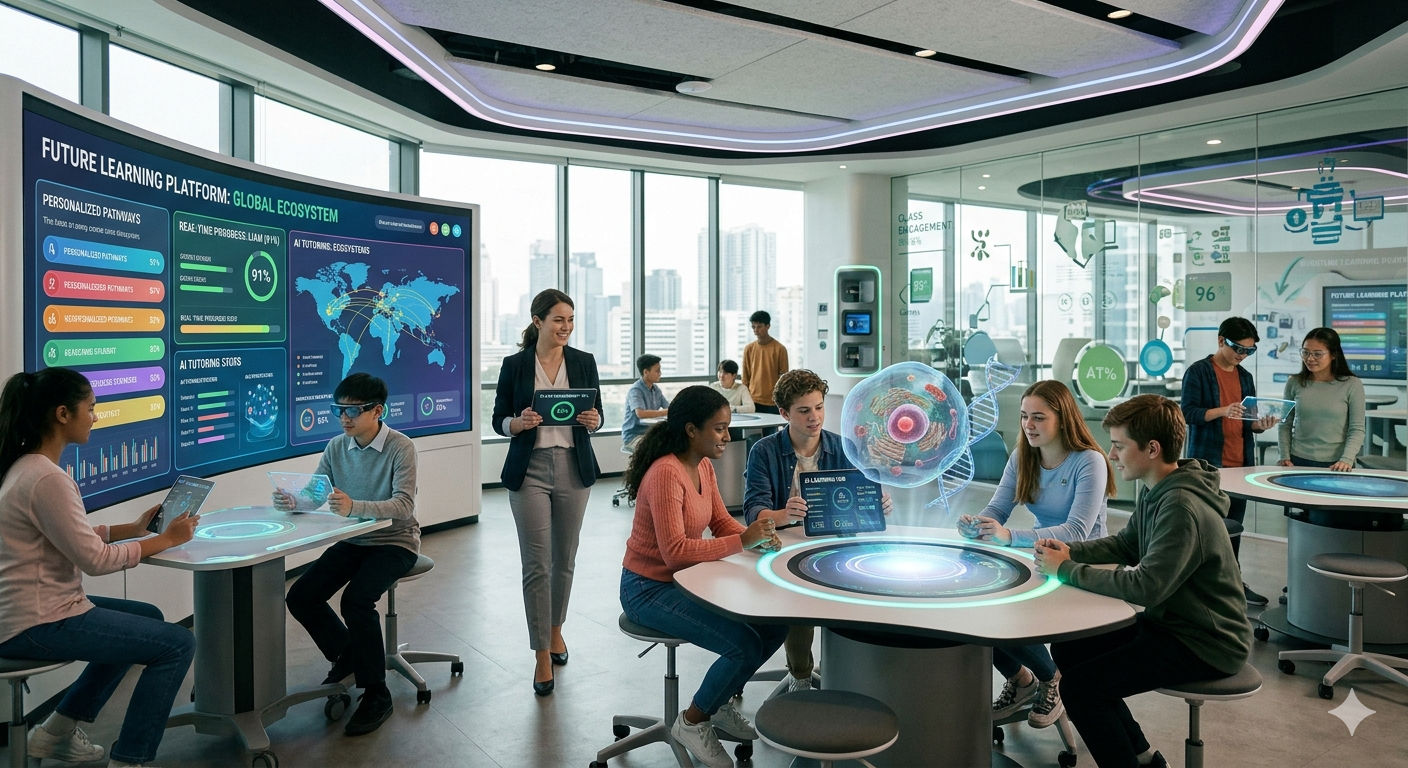
The future of AI in education is not a distant dream. It’s a vibrant ecosystem where personalization, improvement, and moral literacy have become the new normal in the classroom.
Benefits of AI in Education
For Students Designed for Growth
The biggest change is the death of the ‘average’ speed. AI guarantees that every student gets a unique education.
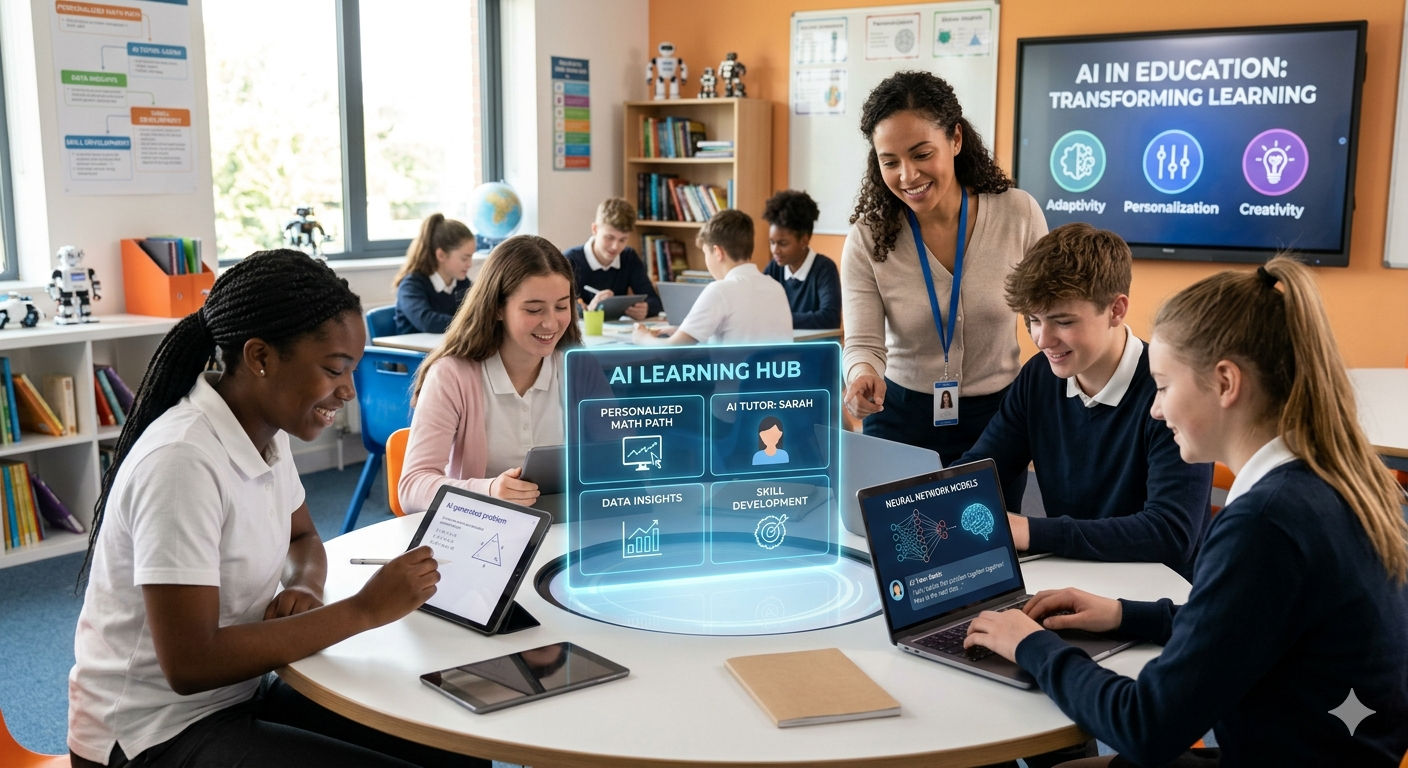
AI powers platforms like The teenager Learning or Astra AI to analyze performance in real time and decide on adaptive learning paths. If a student misses a question about photosynthesis, the AI determines whether that’s because the student doesn’t know the biology, or they didn’t understand the question, and adjusts the next lesson accordingly.
For Teachers: Choosing Back “Human” Time
By 2026, AI is a powerful “co-pilot,” automating the automatic parts of teaching so educators can focus on teaching and mentoring.
Automated Logistics & Grading – Grading is now automated up to 80% for everything from complex essays to coding assignments, with detailed feedback teachers can approve (using tools like EduSage AI and CoGrader), respectively.
Differentiation – Instant Lesson Teachers can create one lesson plan and AI can create five versions of it; one for those who succeed, one for students with reading disabilities and one translated into different home languages.

Artificial Intelligence in learning
By 2026, Artificial Intelligence has shifted from an experimental “add-on” to the core operating system of today’s education. The focus has moved from basic automation to augmentation, with the AI doing the hard work of data in learning and freeing humans to do what is at the core of teaching: mentorship and critical inquiry.
Performance vs. Learning” Gap: Data from 2026 shows students struggle even with a 48% increase in immediate task performance from general AI.
Smart Classrooms
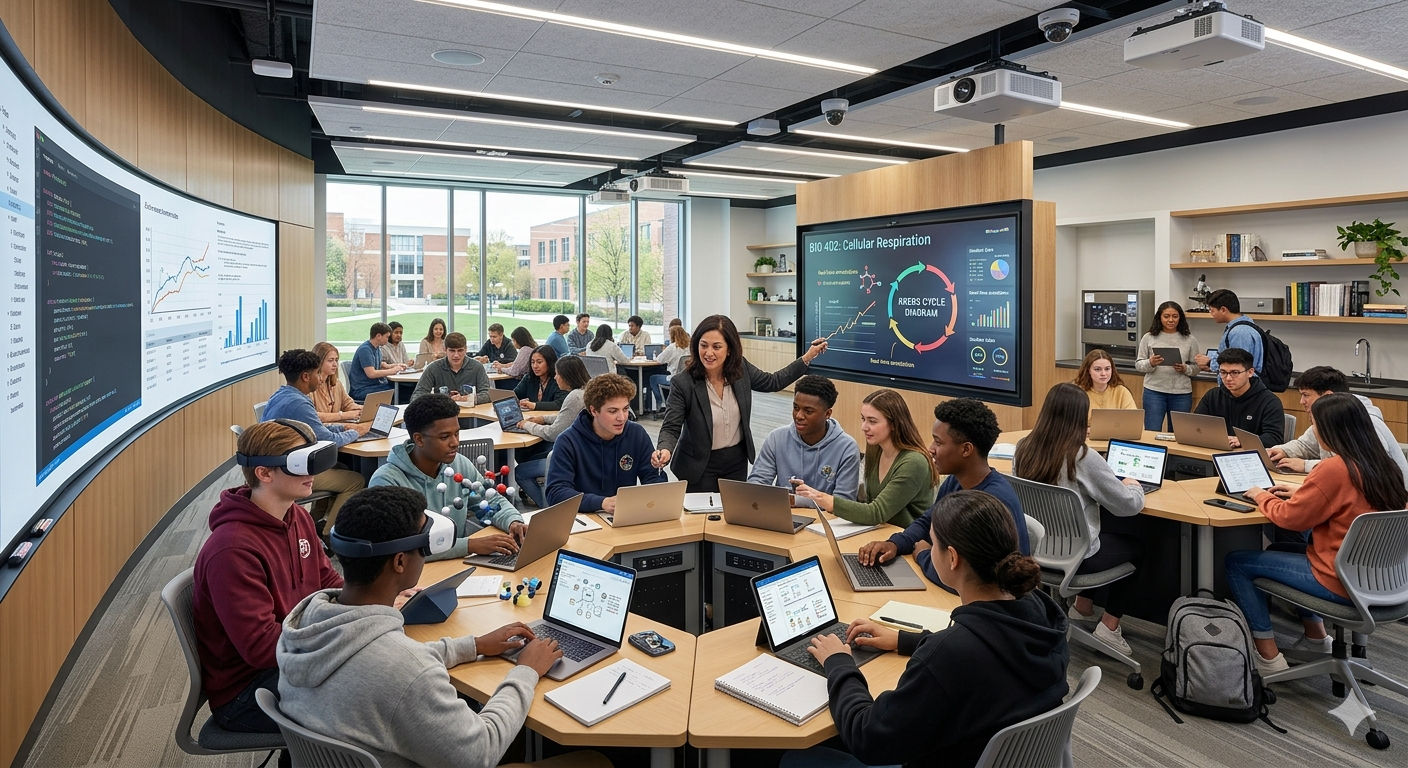
In a future smart classroom, the “one-size-fits-all” education is replaced by dynamic differentiation. AI engines track a student’s progress in real-time, changing the content complexity on their own.
Adaptive Content If a student is struggling with a math concept, the AI picks up on the friction and changes its focus to a different pedagogical approach – perhaps from mathematical equations to a visual, interactive simulation.
Predictive Analytics: AI spots learning gaps before they show up in test scores, noticing educators for targeted interventions.
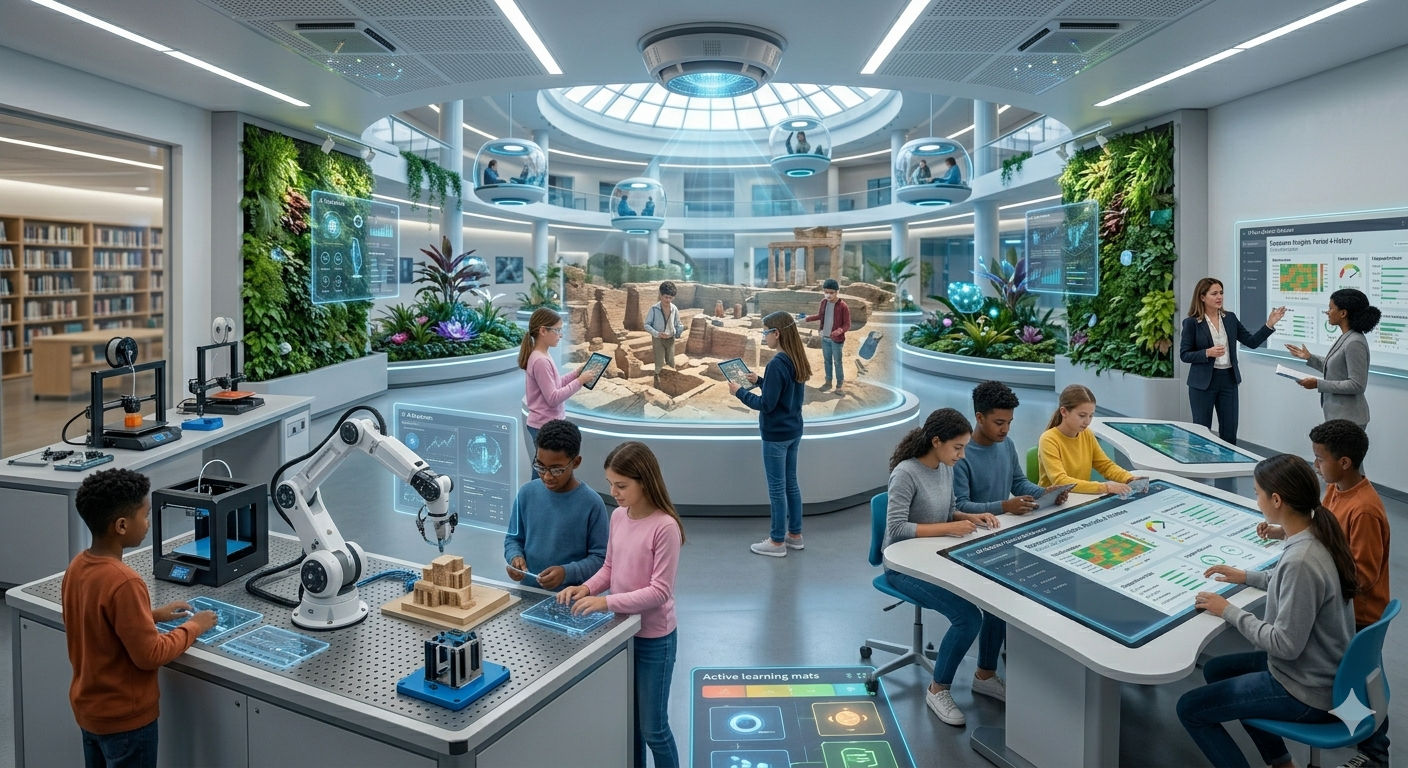
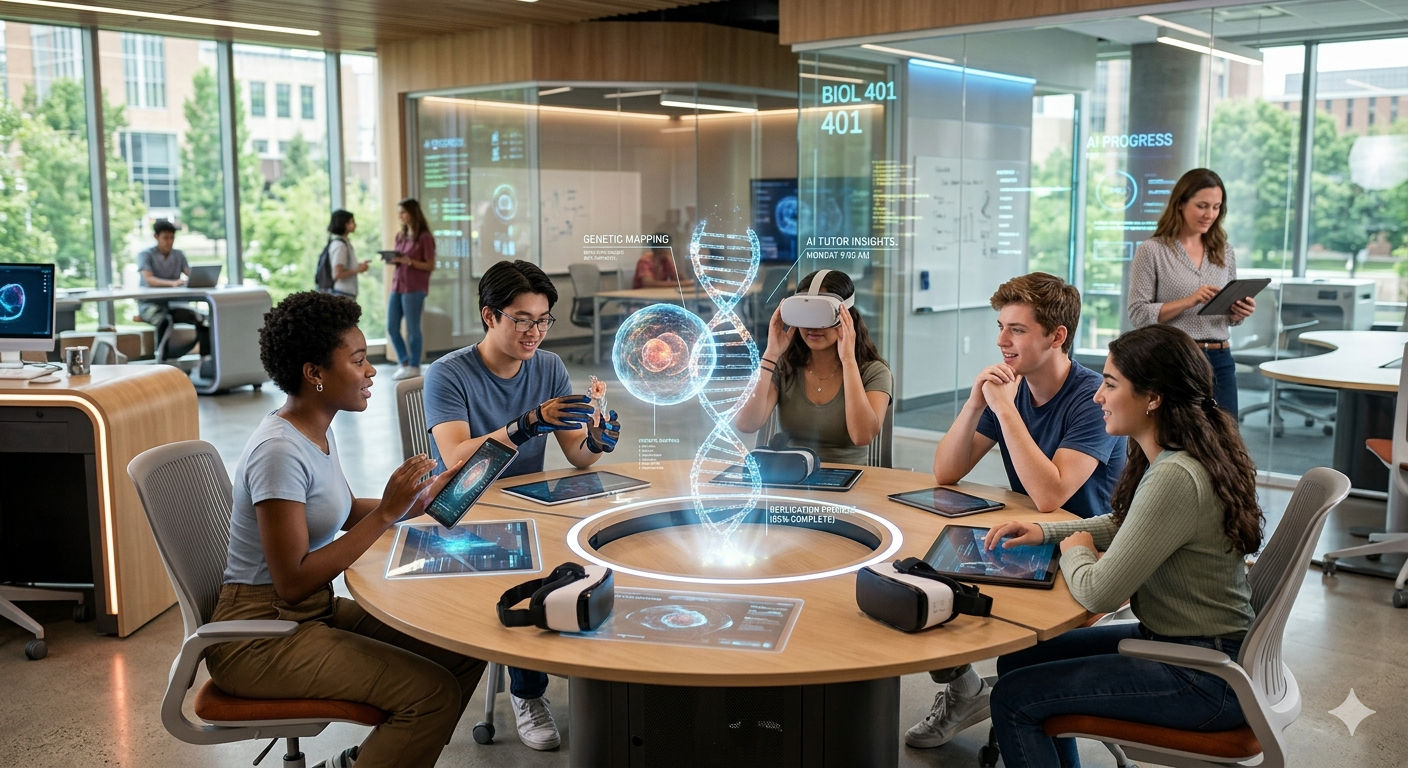
Extended Reality (XR) and AI have been included to dissolve the physical boundaries of the classroom.
AI-Generated Simulations: Students can “walk through” historical events or biological processes. The AI generates these worlds with interactive NPCs (Non-Player Characters) that can answer questions with massive data sets.
Holographic instructions: Guest lecturers or specialist tutors can be presented as high definition illusions and interact with students as if they were physically present.
Future of Education
The Death of the Average Student
Traditionally, curriculum was designed for the “average” student, avoiding those who had trouble and not challenging those who did well.
Dynamic Learning Maps: Every learner gets an AI-generated “knowledge graph.” Let’s say there’s a student who wants to learn Physics but has no background in Calculus. The AI quietly adds refresher modules and then moves on to more complex concepts.
Cognitive Load Management: AI has the ability to identify the duration a student spends on a task or where they drop off in a video, and suggest a change of medium (for example, shifting from reading to a physical simulation) to determine cognitive fatigue.